

Flatbed & Specialized Freight Services
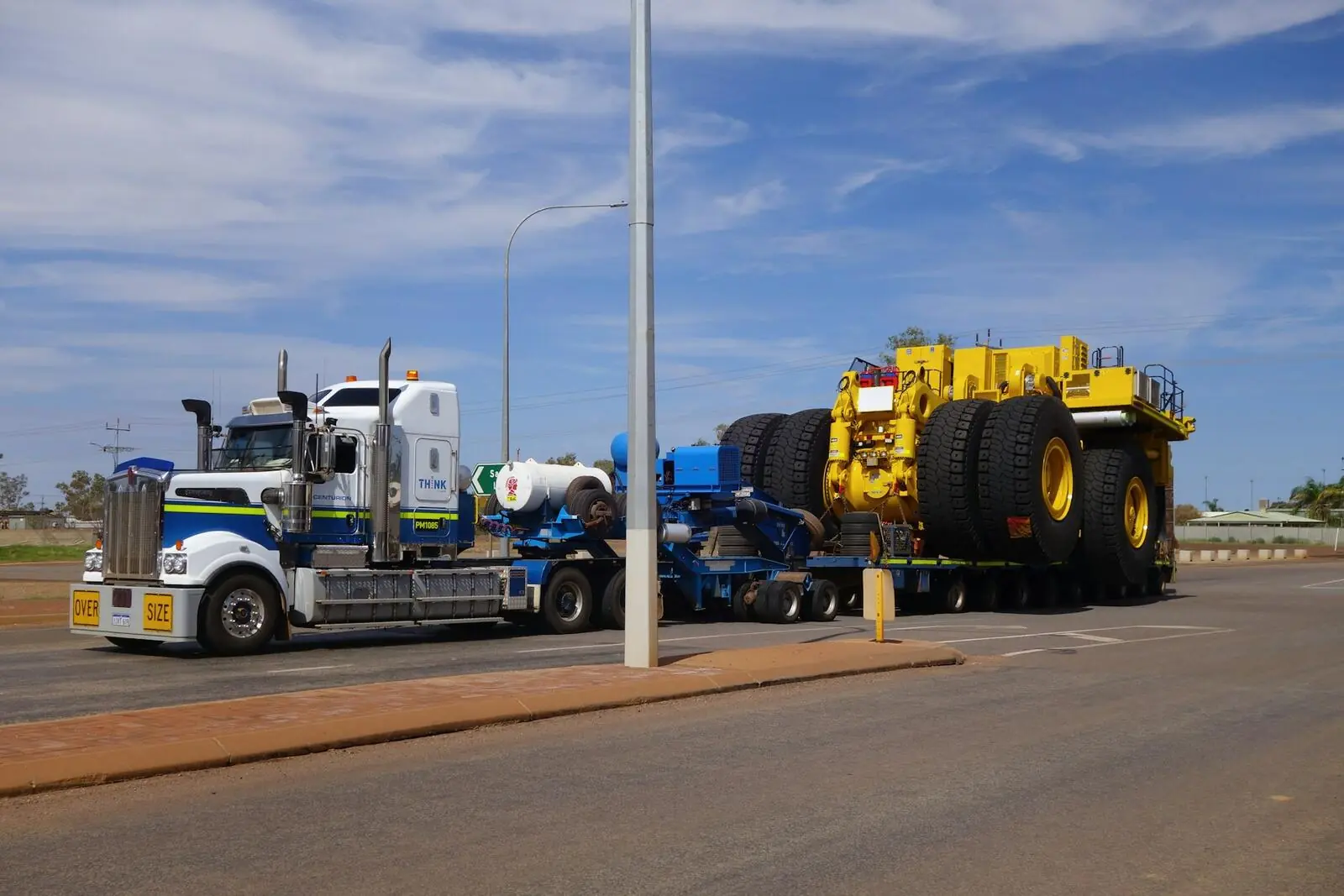
Stryke Logistics arranges flatbed, step deck, double drop, removable gooseneck and oversize freight across Canada, the United States and Mexico. Permits, routing, escorts and securement are planned around the freight's dimensions and weight before the load is booked.
At a glance
- Equipment
- Flatbed, step deck, double drop, removable gooseneck (RGN), extendable trailers and jeep and booster combinations
- Typical freight
- Steel, lumber and building materials, machinery, construction and mining equipment, pipe, tanks and structural components
- Legal width
- 2.6 m (8 ft 6 in); wider, taller, longer or heavier loads need permits
- Permits and escorts
- Arranged for every province and state on the route
- Securement
- National Safety Code Standard 10 in Canada; FMCSA cargo securement rules in the U.S.
- Coverage
- Canada, the United States and Mexico
What we arrange
Equipment matched to the freight
Flatbed for freight loaded from the side or top, step deck for taller freight, double drop and removable gooseneck for heavy machinery that needs the lowest deck, and extendables for long material.
Permits, routing and escorts
Oversize and overweight loads need a permit from every province and state on the route, and some need pilot vehicles and restricted travel times. All of it is planned before the load is booked.
Secured to the standard
Cargo securement follows National Safety Code Standard 10 in Canada and the FMCSA rules in the United States, with tarping for freight that has to stay dry.
Partial and full loads
Flatbed LTL for smaller pieces and full loads for heavy or bulky freight, quoted on the real dimensions.
Site requirements confirmed
Crane or forklift availability, site access and loading times at each end are confirmed before dispatch.
Choosing the right mode
Open-deck equipment is the answer when freight is too tall, wide, heavy or awkward to load through the back of a van.
Palletized freight that fits through a dock door
A dry van protects it from the weather and usually costs less.
TruckloadA few pieces of machinery
Flatbed partial loads share the deck; a full load is only needed when the freight demands it.
A line-down part on a deadline
Hot-shot and dedicated expedited service moves urgent pieces fast.
ExpediteCoverage and lanes
Open-deck freight moves on all four lane types. Oversize loads add permits and routing that differ by province and state, so the route is planned before the rate is final.
Canada domestic
Within Ontario, Ontario–Quebec, and east–west across Canada to the Prairies, British Columbia and the Atlantic provinces.
U.S. domestic
Between U.S. markets, from the Northeast and Midwest to the Southeast, Texas and the West Coast.
Canada–U.S. cross-border
Northbound and southbound through the main crossings, including Windsor–Detroit, Sarnia–Port Huron, Fort Erie–Buffalo and Lacolle–Champlain.
Mexico cross-border
Freight to and from Mexico, coordinated through U.S.–Mexico gateways such as Laredo.
Examples of lanes we arrange
- Hamilton steel to the U.S. Midwest
- Ontario machinery to the U.S. and Western Canada
- Building materials between Ontario and Quebec
- Construction and mining equipment to Northern Ontario and Quebec
Examples only. We arrange lanes across Canada, the United States and Mexico.
How it works
- Send dimensions and weight. Length, width, height and weight of each piece, plus photos or drawings if available.
- Equipment and route. We select the trailer, check the dimensions against legal limits and plan permits and escorts.
- Confirm the sites. Loading equipment, access and hours confirmed at both ends.
- Secure and move. Securement and tarping to standard, tracked through the route and any permit restrictions.
- Delivery and POD. Offloaded on site and proof of delivery returned.
What to send for a quote
- Length, width, height and weight of each piece
- Commodity, and whether it must be tarped
- Loading and unloading method at each end: crane, forklift, dock or ramp
- Pickup and delivery addresses and site restrictions
- Ready date and any required delivery date
Related guides and tools
Frequently asked questions
What is the difference between a flatbed and a step deck?
A step deck has a lower rear deck, so taller freight stays under legal height without a permit. A standard flatbed has one deck height and suits freight that is not tall.
When does a load need an oversize permit?
When it exceeds the legal width of 2.6 m (8 ft 6 in) or the legal height, length or weight on the route. Each province and state issues its own permit, and some loads also need escorts.
What is a removable gooseneck (RGN) used for?
Heavy equipment that drives on. The front detaches so the deck lowers to the ground as a ramp, and the low deck keeps tall machinery under height limits.
How is flatbed freight secured?
To National Safety Code Standard 10 in Canada and the FMCSA cargo securement rules in the United States, using chains, straps and edge protection matched to the freight, with tarps when it has to stay dry.
Do you move flatbed freight across the border?
Yes, in both directions and to and from Mexico. Permits are required in each jurisdiction on the route, and customs paperwork is set up before pickup.
What do you need to quote an oversize load?
The length, width, height and weight of each piece, how it is loaded and unloaded, and the pickup and delivery sites. Photos or drawings help.
Get a Quote
Tell us about your lanes, volumes and timelines. You can expect a response within 12 hours.
Stryke Logistics
Vaughan, Ontario L4H 0S5